As an App Developer, How to Choose the Most Suitable Ad Network?
With the rapid development of the mobile internet, advertising has become the mainstream method for app monetization. According to statistics, approximately 63% of global app developers generate revenue from ads.
If you have decided to monetize your app through advertising, facing numerous ad networks worldwide, do you feel overwhelmed?
Below, TopOn will guide you through 9 core dimensions on how to select an ad monetization network that fits your needs, helping you maximize ad revenue while optimizing user experience!
01
How to More Wisely Choose In-App Advertising?
Developers earn revenue by displaying ads, while users can install and use the app for free. It's a win-win situation. However, to achieve the best results from ad monetization, developers need to address the following two major challenges:
First, to profit from in-app ads, a substantial user base is required. This means attracting and retaining the right users.
Second, user retention is crucial. Poor ad formats can damage the user experience, subsequently affecting retention rates.
Data from Adjust shows that on average, 49% of users leave an app after the first use. Reasons include app quality, ad intrusiveness, and poor ad experiences. In fact, user churn is often due to poor ad experiences. To minimize this risk, choosing a suitable ad monetization network for your app is essential.
Furthermore, selecting an app monetization network requires consideration of multiple factors. There is no one-size-fits-all network for every app. Choosing the right ad network is key to improving monetization efficiency.
02
Nine Core Factors for Choosing an Ad Monetization Network
1. App Type Compatibility
Different types of apps have significant variations in user behavior and usage scenarios, which is an important consideration when choosing a monetization network. For example:
Utility Apps: Frequently used but with short session durations (e.g., reminder tools).
Game Apps: Longer session durations with stronger interactivity (e.g., hyper-casual games).
The monetization goals for these two app types differ. You need to choose a network that can optimize ad monetization based on your app's specific needs.
If an ad network is designed specifically for game apps, it can deliver ads precisely matching user interests. If your app is non-gaming, it is advisable to prioritize more universal ad networks.
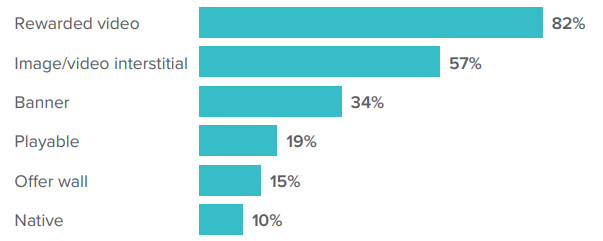
Source: DeltaDNA Popularity of different ad formats in gaming apps
2. Ad Format Diversity
The diversity of ad formats directly determines the flexibility and potential of app monetization. Common ad formats include:
- Banner Ads: Simple to implement but offer lower user experience and revenue.
- Interstitial Ads: Suitable for short-duration pause points.
- Rewarded Video Ads: Highly interactive and popular with users.
- Native Ads: Seamlessly integrate with app content, enhancing experience.
- Offerwall Ads: Incentivize users with rewards to watch ads or complete specific tasks, suitable for certain verticals.
In fact, you don't have to choose just one ad format—your app can display various ad formats. However, not all monetization networks support every format. For instance, not all networks support rewarded video ads, and finding one that supports offerwall ads can also be challenging.
3.Integration Efficiency
Ad networks are typically integrated via APIs or SDKs:
- API: An interface allowing two networks to interact. Easier to integrate but offers relatively limited functionality.
- SDK: A set of software development tools providing comprehensive features (e.g., retargeting, analytics tools), but with higher integration and maintenance costs.
Choosing an integration method that matches your technical capabilities can reduce development complexity while meeting future scaling needs.
4. Smart Ad Serving Mechanisms
How ads are served within an app directly impacts revenue and user experience. It's not uncommon for low-quality ads to completely ruin the user experience, which is a costly mistake that can be easily avoided.
The key lies in how the ad network serves ads. Typically, the ad network or ad exchange selects the best ad for a specific user group, relying on artificial intelligence—this is programmatic advertising.
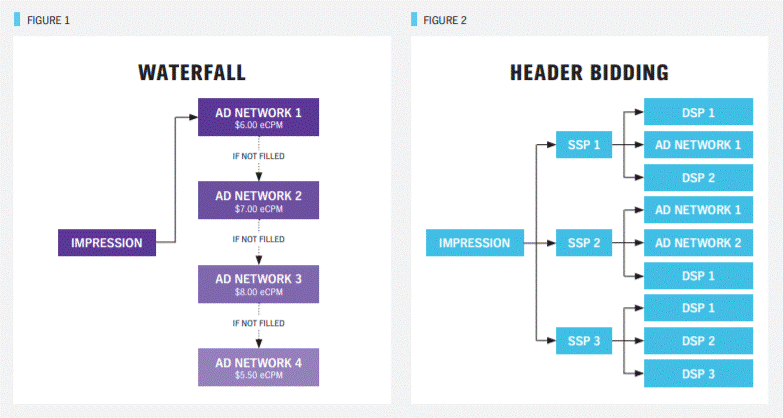
Programmatic advertising is a method of buying and serving ads through automated technology and algorithms. It includes the two most common methods of ad buying and selling—waterfall and in-app bidding.
Waterfall is the older, traditional method, while in-app bidding is the relatively newer approach. Waterfall has been the industry standard for over a decade, and many ad networks still rely on this technology.
Increasingly, developers are shifting towards solutions using in-app bidding. In-app bidding allows developers to offer their ad inventory to all potential bidders—similar to a unified auction. In this mechanism, advertisers bid for ad placements in real-time, with the highest bidder winning.
This bidding approach emerged to address the issues with the waterfall model. However, as this concept is relatively new, in-app bidding solutions are still being refined.
TopOn's Insight:
In this edition, we have delved into the selection criteria for ad networks from four key dimensions, helping developers navigate the path of ad monetization more effectively. Whether it's matching the app type, diversity of ad formats, integration methods, or the intelligence of the serving mechanism, each aspect impacts both user experience and revenue performance.
The remaining five core factors will be detailed in the next edition. Stay tuned to TopOn for the latest industry trends and best practices to help maximize your revenue. See you next time!